
Keep Truck Costs Separate From Loan Payments
11/09/2026
By Talia. E
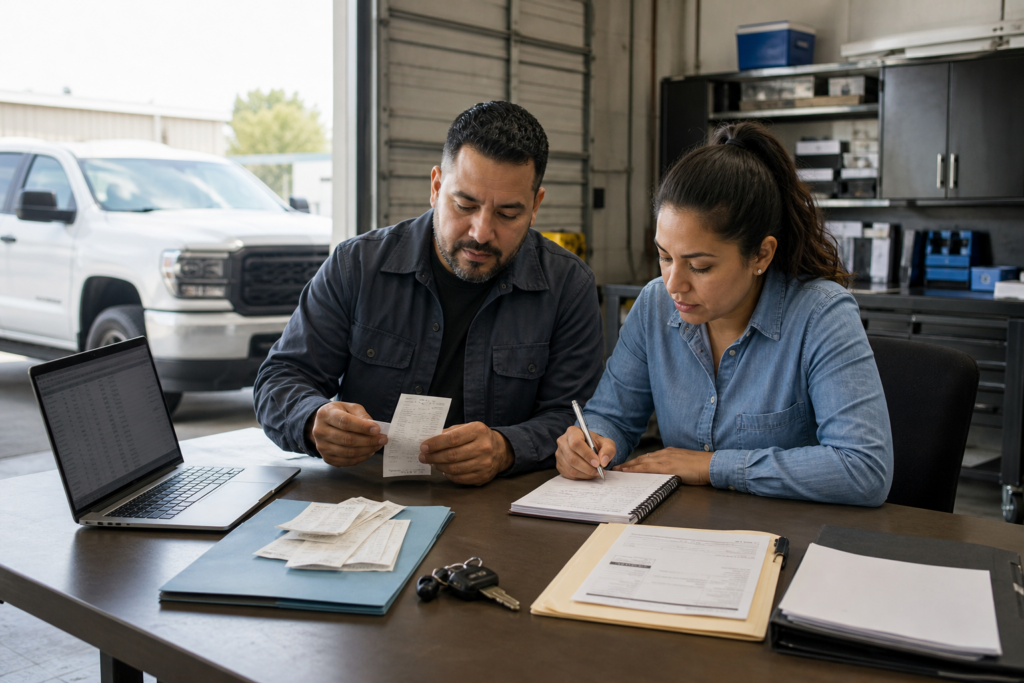
Fuel, repairs, insurance, tolls, and lender payments can all hit the bank feed under different descriptions. If they are all coded to one vehicle-expense account, it becomes difficult to see what a truck costs to operate, which costs belong to which unit, and what documentation supports the entry.
A simple vehicle cost file solves that problem. It gives every truck, van, delivery car, or service vehicle a consistent record for operating costs, use, and financing documents. This is general bookkeeping education, not tax, legal, or accounting advice.
Give every vehicle a stable identity
Set up one digital folder, spreadsheet tab, or tracking label for each business vehicle. Use an identifier that will not change, such as a unit number or the last four digits of the VIN. A license plate can be helpful too, but it may change over the life of the vehicle.
The aim is not to build a complicated fleet system. It is to make each vehicle-related transaction traceable to a specific unit, a supporting document, and a business context. That makes monthly review much more useful than a single catchall auto-expense balance.
- Vehicle profile: unit number, make and model, plate, VIN reference, and date placed in service
- Ownership records: purchase agreement, lease, loan note, and current lender statements
- Operating records: fuel, repairs, tires, maintenance, insurance, registration, parking, and tolls
- Use records: beginning and ending odometer readings, business miles, total miles, and trip or route details when needed
- Payment evidence: card receipt, vendor invoice, bank transaction, reimbursement record, or lender statement
Record details the bank feed cannot supply
A bank-feed description may identify a gas station or repair shop, but it usually cannot tell you which vehicle received the fuel, what work was completed, or whether the charge had a business purpose. Attach the receipt or invoice and add the unit number while the details are still easy to confirm.
For transportation expenses, IRS recordkeeping guidance calls for records of each separate expense. For car expenses, it also calls for the vehicle cost and improvements, date business use began, business-use mileage, and total annual mileage. The IRS says records should be made at or near the time of the expense or use. IRS Publication 463: Travel, Gift, and Car Expenses
- Fuel: date, amount, vehicle unit, and odometer reading when available
- Repair or maintenance: vendor invoice, unit number, work performed, and repair-order or job reference if relevant
- Toll or parking: date, vehicle, route or customer reference, and business purpose
- Insurance and registration: policy or renewal notice, coverage period, vehicle unit, and payment record
- Personal charge on a company card: flag it promptly for the appropriate owner, employee, or reimbursement process instead of leaving it in vehicle expense
Treat a truck payment as two questions, not one expense
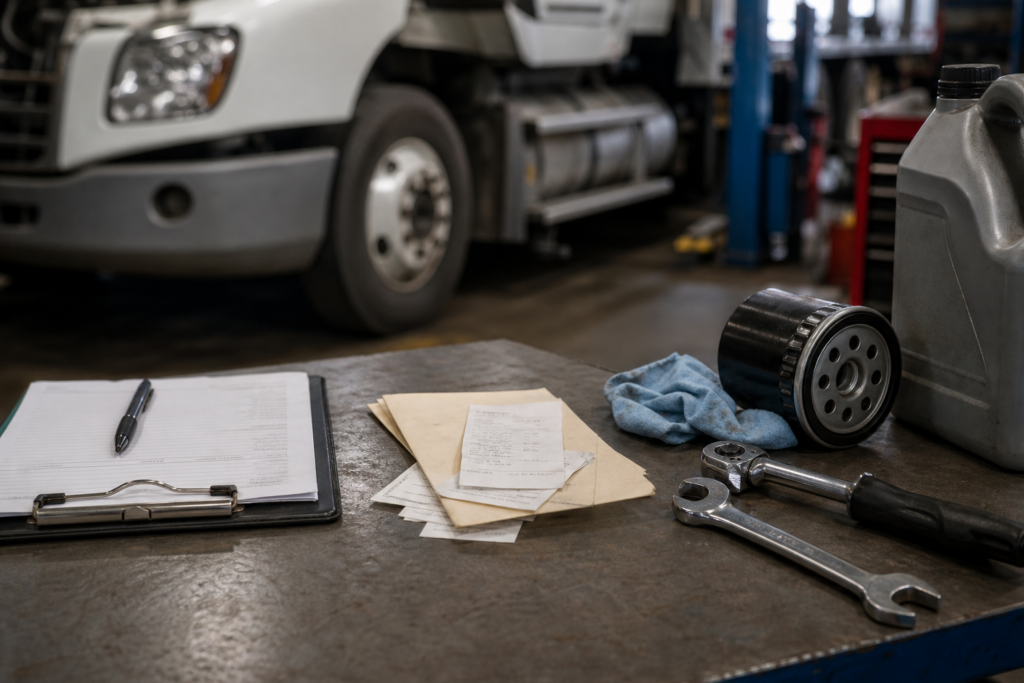
Do not post a monthly truck payment automatically to fuel, repairs, or a general vehicle-expense account. First, retain the lender statement and identify how the payment was applied. An amortizing loan payment commonly includes a principal portion and an interest portion; the statement is the record that supports the split.
For day-to-day bookkeeping, the principal portion is generally posted against the loan balance, while the interest portion is recorded separately. Keep the original purchase documents and major upgrades in the vehicle file as well. The IRS describes the cost of a vehicle, sales tax, and improvements as capital costs rather than routine operating costs. IRS Publication 463: Actual Car Expenses and Capital Costs
Example: A lender statement shows a $900 payment consisting of $640 principal and $260 interest. A clean entry reduces cash by $900, reduces the vehicle-loan balance by $640, and records $260 in interest expense. Use the lender statement rather than estimating the split from the payment amount.
- Save the current loan statement with the related vehicle file each month
- Reconcile the loan balance in the books to the lender statement
- Keep fuel, repairs, tires, insurance, and registration in separate operating-cost categories
- Keep major additions or upgrades in a separate note or subfolder for later accounting review
- Review business-interest treatment with a qualified tax professional when preparing the return; deductibility depends on the facts and applicable rules. IRS Publication 334: Tax Guide for Small Business
Build a reliable record for mixed business and personal use
A vehicle used for both business and personal purposes needs use records, not just expense receipts. Under IRS guidance, mixed-use vehicle expenses must be divided between business and personal use, and miles driven for each purpose can be used for that allocation. IRS Publication 463: Business and Personal Use
Your monthly process does not need to decide the final tax treatment. Its job is to preserve complete information: total miles, business miles, trip details, receipts, vehicle ownership history, and reimbursements. The standard mileage method and actual-expense method have different rules, so keep the underlying records even if a tax professional will make the year-end calculation.
- Record odometer readings at the beginning and end of each month
- Keep a trip log with the date, destination or route, customer or job reference, business purpose, and miles
- For recurring delivery routes, retain route information and delivery records that help support the trip pattern
- Review personal use monthly instead of attempting to reconstruct it at year-end
- Ask your tax preparer about record needs before a vehicle is purchased, sold, leased, or converted from personal to business use

Use receipt photos carefully and keep them retrievable
A clear receipt image is useful when it is linked to the related transaction and shows enough information to explain the purchase. A complete record normally connects the receipt with the vendor, date, amount, vehicle unit, and the nature of the cost. A bank or card charge alone generally does not establish the business purpose of an expense. IRS Publication 463: Recordkeeping
If electronic images will replace original hard-copy books and records, the storage system needs to do more than hold photos. IRS guidance says the system must index, store, preserve, retrieve, and reproduce the records in legible form. It also sets conditions before original hard-copy records may be destroyed. Keep paper originals until you are confident your process meets those requirements. IRS Publication 583: Electronic Records
- Photograph or scan the full receipt, including all pages and line items
- Use a consistent file name, such as date_vendor_vehicle-unit_amount
- Attach the image to the accounting transaction or save it in the vehicle folder with a matching reference
- Check that files can be opened, searched, retrieved, and printed legibly
- Back up the folder and restrict editing access to the people responsible for the records
Make the review fit the operation
Set aside a short monthly review for each unit. Compare vehicle-tagged transactions with card statements, receipts, mileage records, and lender statements. Resolve unidentified charges while the driver, vendor, route, and job details are still available.
Transportation businesses can add driver, route, trailer, load, or delivery-batch fields. Auto repair businesses can keep shop-owned vehicle costs separate from parts and labor tied to customer repair orders. Manufacturers and wholesalers can keep delivery-vehicle costs distinct from forklifts, plant equipment, and inventory purchases.
- Match every vehicle-related bank or card charge to a receipt, invoice, or statement
- Confirm the vehicle unit and, where useful, the driver, route, customer, or job
- Update beginning and ending odometer readings and review missing mileage entries
- Reconcile the lender balance to the current statement
- Review uncategorized, reimbursed, and personal charges before closing the month
- Save the completed monthly summary in the vehicle file
Frequently asked questions
Should all truck costs go into one vehicle-expense account?
A single account may be simple to post to, but it hides useful information. Keep fuel, repairs, insurance, registration, tolls or parking, and financing records distinguishable. You can still keep a simple chart of accounts by using vehicle-unit tracking labels or a supporting spreadsheet.
What mileage information should I retain?
Keep total annual miles and business-use miles, supported by timely records of the date, destination or route, business purpose, and miles for business trips. IRS guidance also calls for records of the vehicle cost and improvements and the date business use began. IRS Publication 463: Transportation Recordkeeping
Can I discard paper receipts after taking a photo?
Not automatically. A receipt photo can be useful supporting documentation, but electronic records that replace original hard-copy books and records must meet IRS requirements for indexing, preservation, retrieval, and legible reproduction. Keep originals until your electronic system and procedures satisfy those requirements. IRS Publication 583: Electronic Records
How should I handle personal fuel bought with the business card?
Identify it as personal as soon as possible, retain the receipt, and remove it from business fuel expense through the appropriate owner, employee, or reimbursement process for the business. The correct treatment depends on the entity, the person who made the purchase, and the company’s policies.
Sources and further reading
This article provides general educational information and is not tax, legal, accounting, or investment advice. Rules and individual circumstances can change; consult an appropriately qualified professional for advice about your situation.